George Town: Chinese Migration and Secret Societies Tour
ID: GYG1182916-1815781
Catégorie:
Pays: Malaisie
Durée du projet:
03:00 horaires
Description
Explore the history of Chinese migration and secret societies in George Town on a guided tour. Discover the city’s urban landscape and its historical significance.
Begin your tour by exploring the Chinese history of George Town, which began in the late 18th century after Penang was established as a British free port in 1786. Waves of Chinese migrants arrived mainly from southern China, including Fujian, Guangdong, Chaozhou, and Hakka regions. Most were poor and uneducated, working as dock laborers, coolies, craftsmen, miners, or small traders.
Far from home and unfamiliar with local laws and languages, these migrants depended heavily on their own communities for survival. In the absence of formal social welfare, they formed self-help organizations based on dialect, clan, or hometown ties. Over time, these groups evolved into clan associations, temples, trade guilds, and what the British later labeled as “secret societies.”
Despite the negative connotation, early secret societies were not criminal organizations. They provided protection, job placement, accommodation, medical assistance, dispute mediation, and funeral services. For many settlers, these groups functioned as informal social security systems and community governance.
During the 19th century, secret societies became deeply involved in George Town’s economy, controlling trades such as port labor, pepper and gambier plantations, tin mining, and transportation. Competition over limited resources led to rivalry, sometimes escalating into violent conflicts, most notably the Penang Riots of 1867. These events reflected broader issues including political instability, weak colonial control, and rapid population growth.
Initially, the British tolerated secret societies as a way to manage the Chinese population indirectly. However, rising violence led to stricter laws and closer cooperation with officially recognized Chinese leaders. This resulted in the Kapitan China system and formal institutions such as the Chinese Town Hall and major clan associations, which gradually replaced secret societies as community representatives.
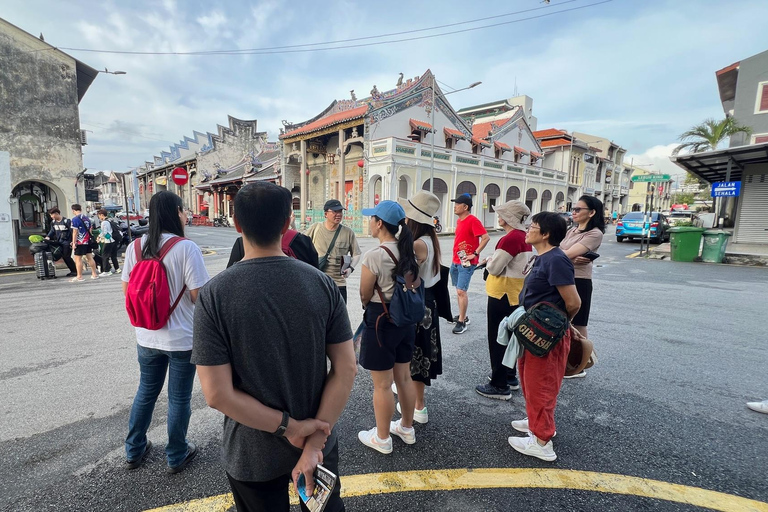
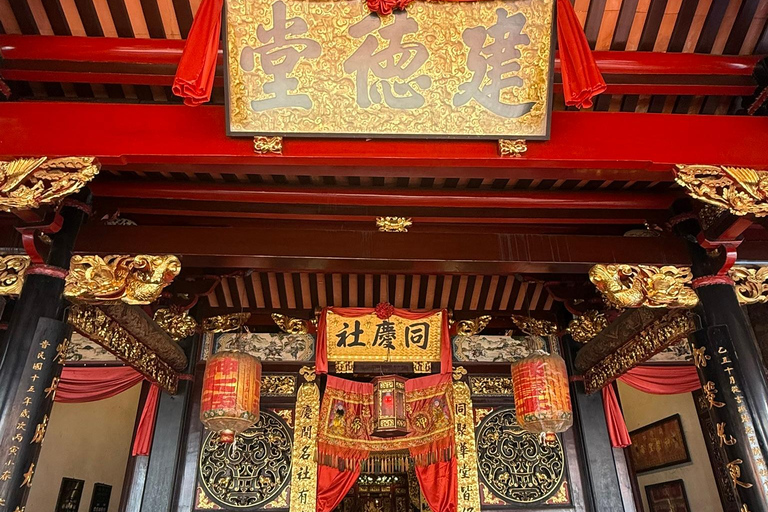
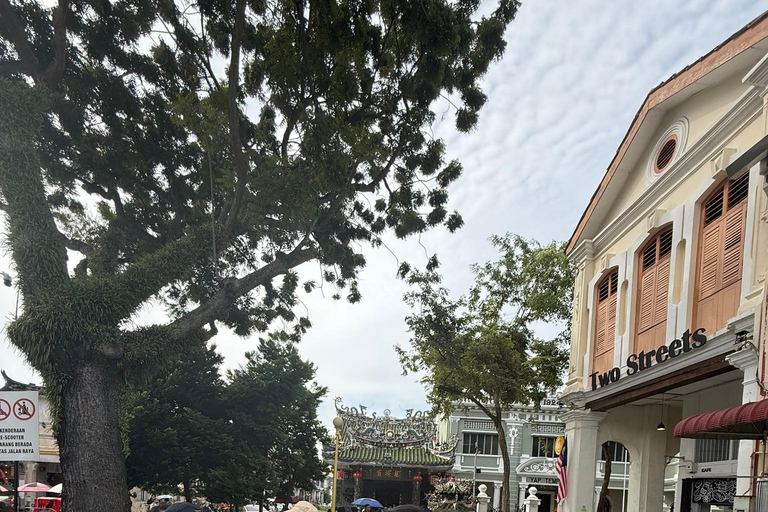
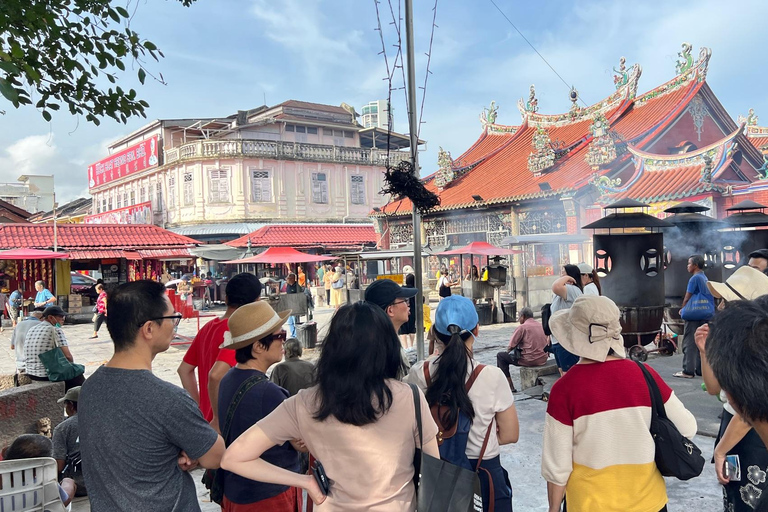
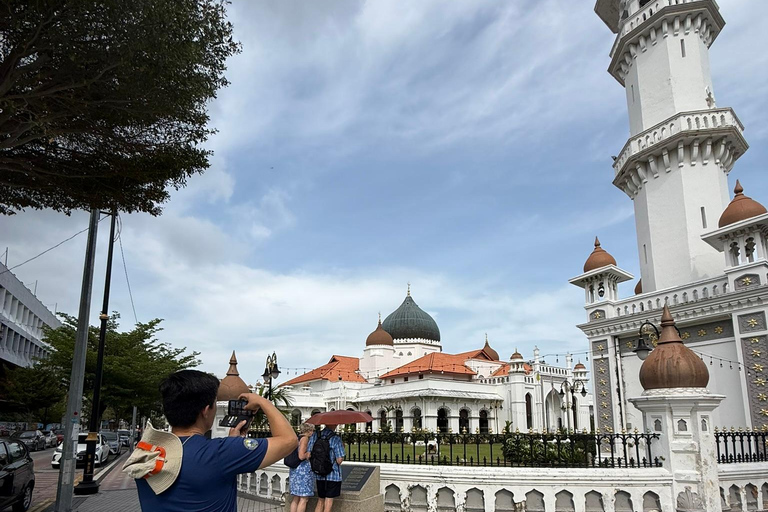
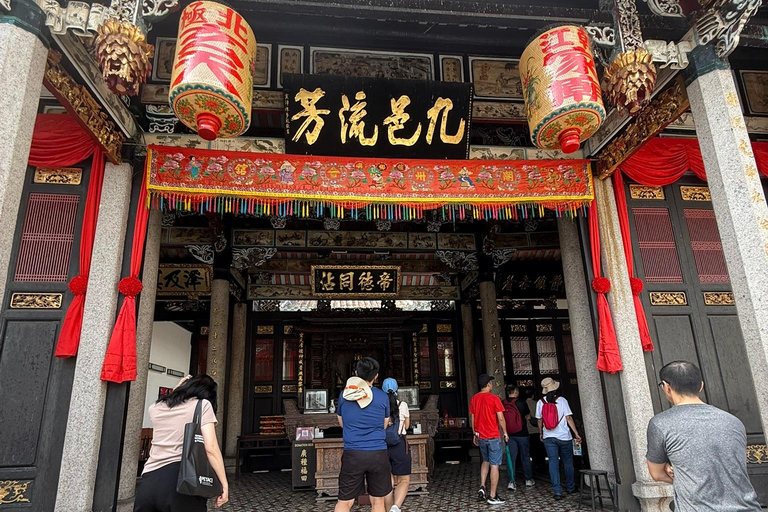
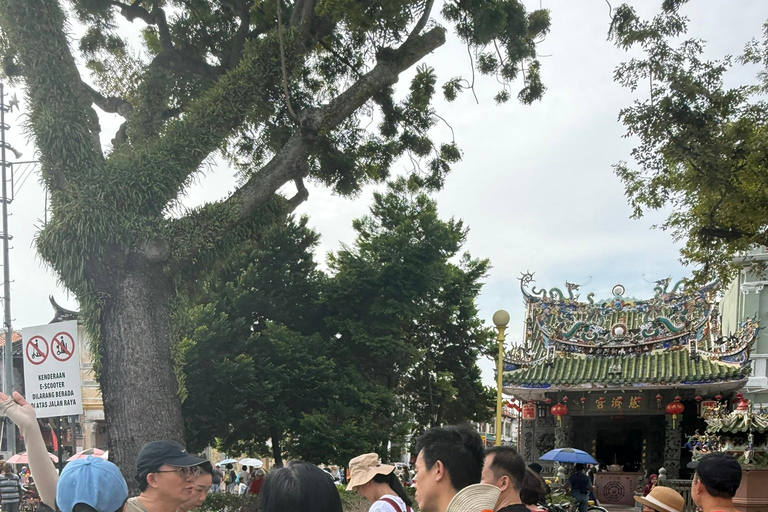
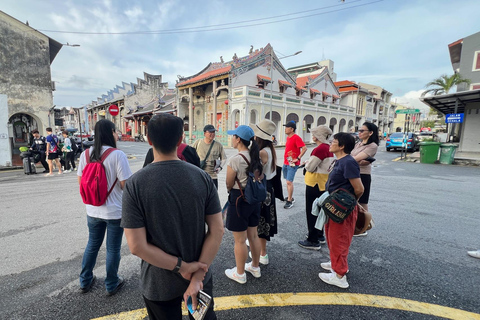
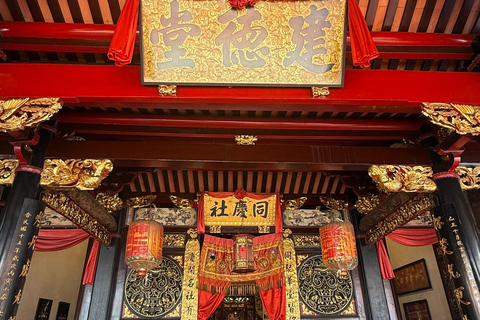
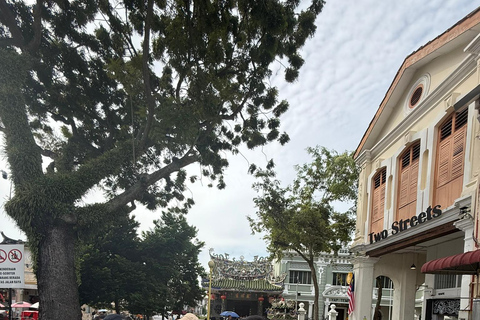
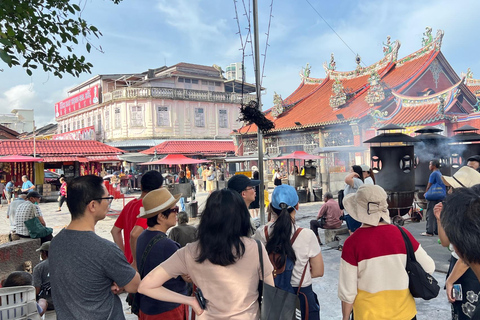
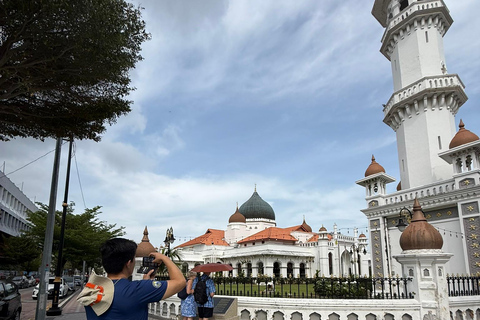
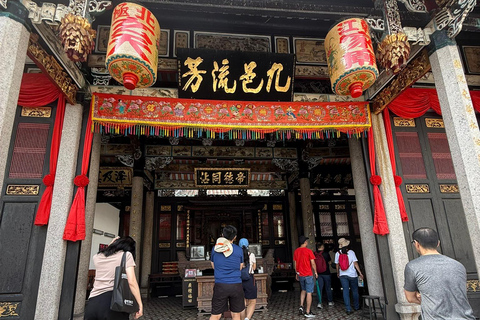
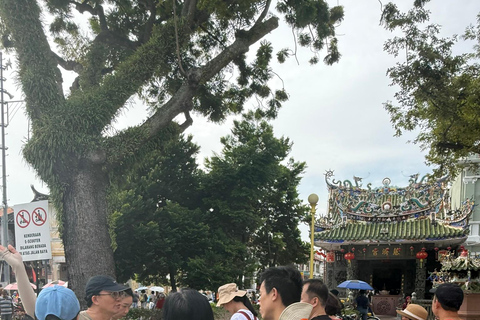
Although secret societies no longer exist today, their legacy remains visible in George Town’s urban landscape. Temples, clan houses, street layouts, and shrines often reflect former community boundaries and networks. Many quiet heritage buildings once played vital roles in maintaining order and identity.
Understanding this history allows you to see George Town beyond its architecture. It reveals how migrants survived hardship, organized themselves, and negotiated power in a colonial society—one of the key reasons George Town is recognized as a UNESCO World Heritage Site.
Faits saillants
- Discover the history of Chinese migration in George Town
- Learn about the role of secret societies in the city’s development
- Explore the city’s urban landscape and its historical significance
- See the locations of temples, clan houses, and traditional streets
- Understand the complex process of cooperation, conflict, and adaptation
Langues
INFORMATION IMPORTANTE
The tour involves walking, so wear comfortable shoes.
The tour provides historical insights into the Chinese community and secret societies in George Town.
The activity is suitable for those interested in history and culture.
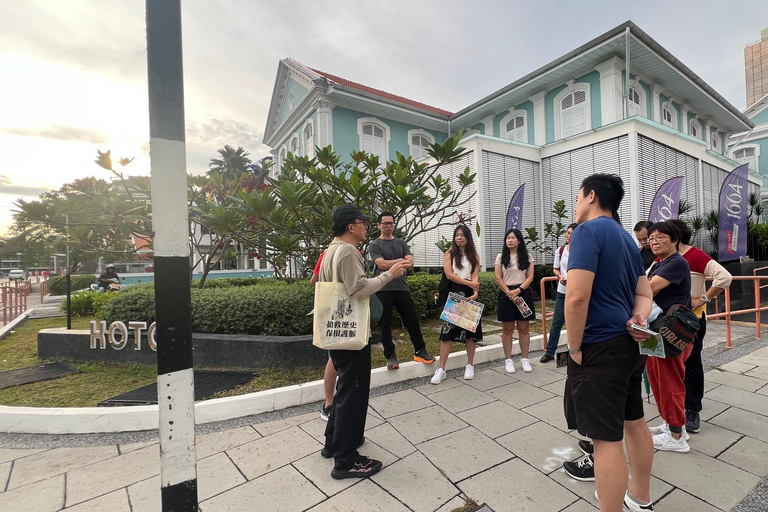
In-front of Hong Leong Bank Light Street
INCLUS
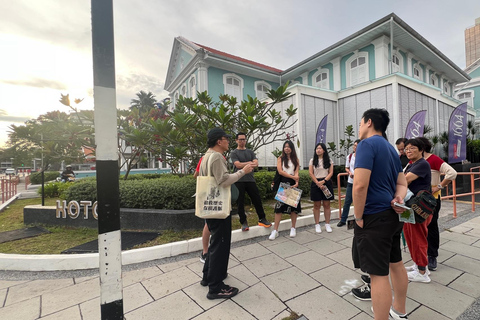
- 3-hour walking tour
- Licensed tour guide, fluent in English, Mandarin, and Cantonese.
NON INCLUS
- Tips
- Transport
- Meals
- Admission
- Other personal expenses
Quand dois-je réserver ?
Garantir la disponibilité du livre dans les plus brefs délais. Les réservations anticipées valent la peine d'être prises en considération, surtout si vous planifiez le voyage en haute saison, comme les jours fériés ou les fins de semaine.
Annulations
Cette excursion peut être annulée sans frais jusqu'à : heures d'annulation avant le début du voyage. Si vous l'annulez après les heures d'annulation ou si vous ne vous présentez pas à l'excursion, le prix total de l'activité vous sera toujours facturé. Tout retard à la prise en charge ou au départ sera considéré comme un retard.